




Key Takeaway
Ceramides are lipid molecules that cement skin cells together, sealing in moisture and keeping irritants out — this guide explains how they rebuild a damaged barrier.
Ceramides are waxy lipid molecules that sit between skin cells like mortar between bricks, making up roughly 50% of the outer skin layer (the stratum corneum) by weight. They are the main reason your skin barrier holds moisture in and keeps irritants, pollution and bacteria out — when ceramide levels fall, water escapes through the skin faster than it should, and skin turns tight, flaky, rough or reactive.
This guide breaks down what ceramides actually do, why Karachi's humidity swings and Lahore or Islamabad's dry winters strip them faster, and how to rebuild a compromised barrier with products genuinely formulated around ceramides — not just marketed as "hydrating." BigBasket.pk stocks the CeraVe range, built specifically on three ceramides identical to the ones skin makes naturally, plus a few barrier-support serums worth layering underneath, all with Cash on Delivery across Karachi, Lahore, Islamabad and the rest of Pakistan.
What Ceramides Actually Do in Your Skin
Picture the outermost layer of your skin — the stratum corneum — as a brick wall. The "bricks" are corneocytes (flattened, dead skin cells), and the "mortar" holding them together is a lipid matrix made of roughly ceramides, cholesterol and free fatty acids in an approximate 3:1:1 ratio. Ceramides are the single largest component of that matrix by weight, and they do two jobs at once: they lock corneocytes together so the barrier stays structurally intact, and they form a water-resistant seal that slows moisture loss.
When that lipid matrix is intact, water moves out through skin slowly and in a controlled way. When ceramide levels drop — through age, weather, over-cleansing or harsh actives — gaps open between corneocytes. Water escapes faster (higher transepidermal water loss, or TEWL), and because the barrier is no longer a tight seal, allergens, irritants and bacteria find it easier to get in. This is the mechanism behind most "sensitive skin" complaints: skin rarely becomes allergic overnight; more often, the barrier that used to block irritants simply thinned.
Dermatology research consistently shows that conditions like atopic dermatitis (eczema), psoriasis and chronically dry skin all involve measurably lower ceramide levels than healthy skin, which is why ceramide replacement — applying the same lipids topically that skin is short on — is one of the more evidence-backed strategies in skincare, not just a marketing term.
Why Your Skin Barrier Breaks Down in Pakistan's Climate
Ceramide loss is not random — specific habits and conditions accelerate it, and several are especially common in Pakistan. Karachi's humidity swings between sticky monsoon months and dry, air-conditioned indoor air pull moisture out of skin in both directions, and constant AC exposure at work or home lowers ambient humidity enough to stress the barrier daily. In Lahore and Islamabad, winter cold combined with low humidity and hot bath or geyser water is one of the fastest ways to strip ceramides — hot water dissolves surface lipids more effectively than warm or lukewarm water.
Bar soaps and heavily foaming, sulfate-based face washes are another major factor: their surfactants remove oil and dirt well, but they also strip ceramides and cholesterol from the barrier along with everything else. Over-exfoliating with strong AHA/BHA acids, using retinoids without building tolerance, and unprotected sun exposure all add up the same way — each depletes the lipid matrix faster than skin can rebuild it on its own.
Age plays a role too: natural ceramide production declines steadily after the mid-20s, which is one reason skin that tolerated harsh products at 20 starts reacting to the same products at 35. None of these factors are alarming individually, but stacked together — hot showers, AC, a foaming cleanser and a retinol in the same week — they explain why so many people in Pakistan describe their skin as "suddenly sensitive" despite no change in products.
Signs Your Ceramide Barrier Is Damaged
A compromised barrier tends to announce itself gradually rather than all at once. The earliest sign is usually a persistent tight, "stretched" feeling after cleansing that does not resolve with your usual moisturizer. Visible flaking or rough, sandpaper-like texture — especially around the nose, cheeks and jawline — follows, often paired with dullness, since a rough surface scatters light instead of reflecting it evenly.
- Stinging or burning with products that never used to bother you, including plain water or a mild cleanser
- Redness or a warm, flushed feeling that appears without an obvious trigger
- Rough or scaly patches, particularly on cheeks, around the mouth or on the backs of hands
- Breakouts that don't respond to acne products — often a sign skin is over-stripped and overproducing oil to compensate, not genuinely acne-prone
- Skin that looks shiny yet feels tight, a common combination when the barrier is damaged but sebaceous glands are still active
If several of these show up together, especially after a stretch of hot showers, strong actives or a new foaming cleanser, the barrier — not the specific product you last used — is usually the real issue. The fix is rarely "add more actives"; it is almost always to strip back the routine and reintroduce ceramides.
The Three Essential Ceramides — and Why CeraVe Is Built Around Them
Human skin naturally contains several ceramide subtypes, but three are considered essential for barrier function: Ceramide 1 (EOP), which anchors the lipid layers together; Ceramide 3 (NP), one of the most abundant in healthy skin and central to water retention; and Ceramide 6-II (AP), which supports skin renewal and elasticity. CeraVe is formulated specifically around this trio, alongside its patented MVE (MultiVesicular Emulsion) technology, which releases the ceramides and humectants gradually over roughly 24 hours instead of all at once.
For very dry or flaking skin on the body and face, CeraVe Moisturizing Cream – 56ml is a thick, fragrance-free cream built for barrier repair, and works well as a starter size before committing to a larger jar. For lighter, faster-absorbing daily use on normal to combination skin, CeraVe Daily Moisturizing Lotion – 87ml delivers the same three ceramides in a lotion texture that layers easily under makeup or sunscreen.
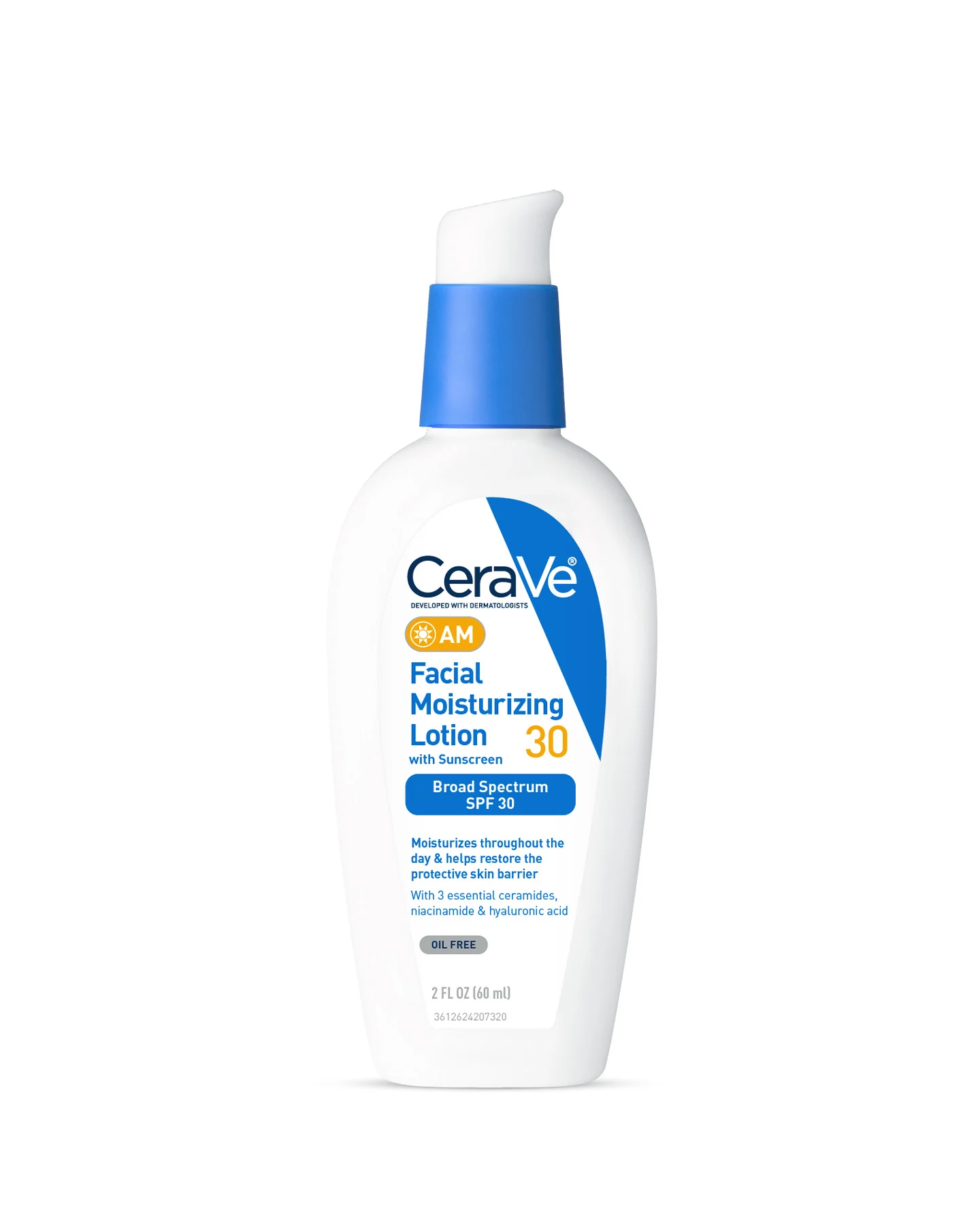
The facial-specific lotions split by time of day: CeraVe AM Facial Moisturizing Lotion – 60ml is built for daytime use, while CeraVe PM Facial Moisturizing Lotion 60ml adds niacinamide for overnight barrier repair. Both are non-comedogenic, so ceramides do not clog pores or feel heavy — a common misconception that keeps oily and acne-prone skin away from them unnecessarily.
| Product | What It Is | Price (PKR) | Best For |
|---|---|---|---|
| CeraVe Moisturizing Cream – 56ml | Rich ceramide repair cream | See current price on the linked product page | Very dry, flaking skin |
| CeraVe Daily Moisturizing Lotion – 87ml | Lightweight ceramide lotion | See current price on the linked product page | Normal-to-oily, all-over daily use |
| CeraVe AM Facial Moisturizing Lotion – 60ml | AM ceramide face lotion | See current price on the linked product page | Daytime facial hydration |
| CeraVe PM Facial Moisturizing Lotion 60ml | PM ceramide + niacinamide | See current price on the linked product page | Overnight barrier repair |
| The Ordinary Soothing & Barrier Support Serum – 30 Ml | Soothing barrier serum | See current price on the linked product page | Stinging, reactive skin |
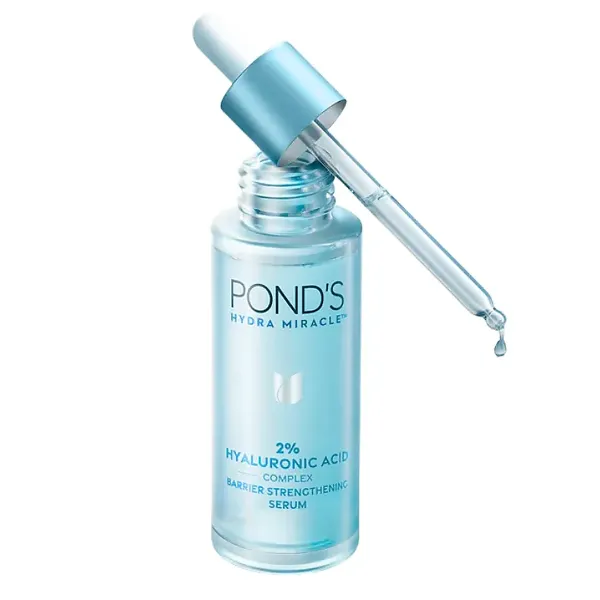
| PONDs Hydra Miracle Barrier Strengthening Serum - 30ml | Budget barrier serum | See current price on the linked product page | Tight budget, quick add-on |
Prices correct as of July 2026. Cash on Delivery available across Pakistan.
How to Layer Barrier-Repair Products Correctly
Order matters when you are actively repairing a barrier. The rule is thinnest, most water-based product first, thickest, most occlusive product last — cleanser, then a soothing or barrier-support serum, then a ceramide moisturizer, then sunscreen in the morning. Apply moisturizer while skin is still slightly damp from cleansing or a hydrating mist, not bone-dry, so the ceramides have moisture to seal in.
If your skin is actively stinging, flaking or reactive, a soothing serum underneath the moisturizer speeds things along. The Ordinary Soothing & Barrier Support Serum – 30 Ml is built around beta-glucan, amino acids and squalane rather than ceramides directly, so it calms and cushions a stressed barrier before you seal it with a ceramide cream. On a tighter budget, PONDs Hydra Miracle Barrier Strengthening Serum - 30ml is an affordable entry point for adding a barrier-focused step to a basic routine.
What to skip while the barrier is healing: fragranced products, alcohol-heavy toners, physical scrubs, and — temporarily — retinoids or AHA/BHA acids. None of these are "bad" long-term, but layering them onto an already-compromised barrier undoes repair work faster than ceramides can rebuild it. Reintroduce actives one at a time, a few weeks apart, once flaking and stinging have fully resolved.
Ceramides vs Hyaluronic Acid, Niacinamide and Squalane
Ceramides get compared to hyaluronic acid, niacinamide and squalane often, but they solve different problems and work best together, not as substitutes. Hyaluronic acid is a humectant — it pulls water into the skin's surface but does not hold the barrier structure together, so on its own in dry Lahore or Islamabad winter air it can pull moisture from deeper layers if not sealed with a moisturizer. Niacinamide works differently again: research links it to increased natural ceramide synthesis over time plus reduced water loss, which is why it appears alongside ceramides in formulas like CeraVe PM Facial Moisturizing Lotion 60ml. Squalane is an emollient and mild occlusive — it smooths and softens but does not replace the structural lipid matrix ceramides provide.
Put simply: humectants attract water, emollients smooth the surface, occlusives slow water loss from the top, and ceramides rebuild the barrier itself from within. A routine that leans on hyaluronic acid or squalane alone while skipping ceramides will feel hydrated in the moment but will not fix a barrier that is structurally thin. For genuine repair, ceramides need to be in the mix, not treated as optional.
How Long Barrier Repair Takes, and When to See a Dermatologist
Most mild-to-moderate barrier damage improves within 2 to 4 weeks of consistent ceramide-based moisturizing, twice daily, alongside cutting out the habits that caused it — hot showers, harsh cleansers, unnecessary actives. More significant damage, such as chronic eczema-prone skin or a barrier stripped by months of over-exfoliation, can take 6 to 8 weeks to visibly stabilize. Consistency matters more than product-switching: applying a ceramide moisturizer like CeraVe Moisturizing Cream – 236ml every day for a month will outperform trying five different serums for a week each.
Progress looks like less flaking within the first week, reduced stinging from previously irritating products by week two, and a return to normal texture and tone by week three or four. If skin is cracking, oozing, persistently painful, or shows signs of infection, that goes beyond what topical ceramides can fix alone and needs a dermatologist rather than a routine adjustment.
One practical note for Pakistan specifically: buy CeraVe and other barrier products through verified retailers with traceable batch codes. Counterfeit "CeraVe" sold loose in some local markets is a real risk, and a barrier already under repair is the worst time to apply a product with an unverified, possibly irritant-laden formula. Browse the full Skin Care range for more barrier-repair options.
Common Mistakes
- Piling on retinol, vitamin C or AHA/BHA acids while the barrier is still flaking and stinging, which delays repair instead of speeding it up.
- Assuming any 'hydrating' serum is a ceramide serum — many barrier-support serums use beta-glucan, amino acids or squalane instead, and work best layered under an actual ceramide moisturizer, not as a replacement for one.
- Cleansing with bar soap or a heavily foaming face wash, then wondering why moisturizer stops feeling like enough.
- Applying moisturizer to bone-dry skin instead of slightly damp skin, which reduces how well ceramides absorb.
- Buying 'CeraVe' from unverified local sellers at suspiciously low prices — check batch codes and buy from a traceable, Cash-on-Delivery source.
- Expecting visible change in 2-3 days; real barrier repair takes 2-4 weeks of consistent, twice-daily use.
Shop BigBasket.pk
Products Featured in This Article
100% authentic — Cash on Delivery across Pakistan




Frequently Asked Questions
What are ceramides for skin barrier repair?+
Ceramides are lipid molecules that make up about 50% of the skin's outer layer by weight, holding skin cells together and sealing in moisture. Applying a ceramide-based moisturizer such as CeraVe replaces lipids the barrier has lost, which reduces water loss and rebuilds resistance to irritants over 2-4 weeks of consistent use.
Does CeraVe actually contain ceramides, or is it just a marketing name?+
CeraVe is formulated with three specific ceramides — 1, 3 and 6-II — the same types found naturally in healthy skin, delivered through its MVE technology for slow release over about 24 hours. This is a genuine, well-documented formulation approach; products like CeraVe Moisturizing Cream – 56ml and CeraVe Daily Moisturizing Lotion – 87ml are built around it.
Can oily or acne-prone skin use ceramide moisturizers without breaking out?+
Yes — ceramides are naturally occurring skin lipids, not pore-clogging oils, and CeraVe's facial lotions are formulated to be non-comedogenic. Oily skin often has a damaged barrier too, since over-cleansing to control shine strips ceramides the same way it does on dry skin, so a lightweight option like CeraVe AM Facial Moisturizing Lotion – 60ml can help rather than worsen breakouts.
How long does it take to repair a ceramide-depleted skin barrier?+
Mild to moderate damage typically improves within 2 to 4 weeks of twice-daily ceramide moisturizer use, while more significant damage from months of over-exfoliation or chronic eczema can take 6 to 8 weeks. Consistency with one product matters more than switching between several.
Is The Ordinary Soothing & Barrier Support Serum the same as a ceramide product?+
No — it's built around beta-glucan, amino acids and squalane rather than ceramides, so it's a soothing, cushioning layer rather than a ceramide replacement. It works well applied before a ceramide moisturizer like CeraVe, not instead of one.
What ingredients should I avoid while my skin barrier is healing?+
Pause retinoids, AHA/BHA acids, strong vitamin C, fragranced products and alcohol-heavy toners until flaking and stinging fully resolve, since all of them stress a barrier that is already thin. Reintroduce actives one at a time, a few weeks apart, once a ceramide moisturizer has restored comfort.
The Short Version
TL;DR: Ceramides are the lipid "mortar" that holds skin cells together and seals in moisture — when levels drop, skin gets dry, tight, flaky and reactive. CeraVe is formulated with the same three essential ceramides skin naturally makes, so CeraVe Moisturizing Cream or CeraVe Daily Moisturizing Lotion are genuine barrier-repair options, not just hydrators. For actively irritated skin, layer a soothing serum underneath and give the routine 2-4 weeks of consistent, twice-daily use before judging results.
Related Reading
- → Niacinamide vs Ceramides: Which Does Your Skin Need First?
- → Panthenol (Vitamin B5) for Skin — Barrier Repair & Deep Hydration Guide
- → Niacinamide vs Alpha Arbutin: Which Brightens Skin Better?
- → Vitamin C vs Niacinamide: Best Garnier Serum for Your Skin
- → Chemical vs Physical Exfoliants for Oily, Acne-Prone Skin
- → Niacinamide for Acne & Dark Spots — Does It Work for Pakistani Skin?
Price note: Prices mentioned in this guide are snapshots and may change. The linked product page shows the current BigBasket.pk price and availability.