




Key Takeaway
Niacinamide treats oil, pores and dullness; ceramides rebuild the skin barrier and lock in moisture. Here's which one Pakistani skin should use first — and how to layer both correctly.
Niacinamide vs ceramides for skin comes down to two different jobs: niacinamide is an active that treats oil, pores, tone and early pigmentation, while ceramides are the fats that hold your skin barrier together and keep moisture from escaping. Most people don't have to pick one forever — but if your skin is reactive, flaking or barrier-damaged right now, ceramides come first; if your main complaints are oiliness, enlarged pores or uneven tone, start with niacinamide.
Most Pakistani skin eventually needs both, just in the right order: treat oiliness and pigmentation with niacinamide, or calm a dry, over-exfoliated barrier with ceramides, then bring in the other once your skin has settled.
What Niacinamide Actually Does for Your Skin
Niacinamide (vitamin B3) is an active ingredient, not a moisturizing lipid — it changes how your skin behaves rather than simply sitting on top of it. At concentrations between 2% and 10%, it visibly regulates sebum production, minimizes the look of enlarged pores, and fades the dark post-acne marks and uneven tone that show up more stubbornly on wheatish, tan and deep skin tones. It's also one of the few actives gentle enough for daily AM and PM use on most skin types, including sensitive skin.
What most people don't know: niacinamide also encourages skin to produce more of its own ceramides and free fatty acids over time, which is why long-term users often notice their skin feels less reactive, not just less oily. For a standard entry dose, The Ordinary Niacinamide 10% + Zinc 1% – 30ml is the most widely used formula in Pakistan for oil control and pore appearance; the 60ml size works out cheaper per ml for long-term use. For stubborn oiliness or larger pores, Cosrx The Niacinamide 15 Serum steps the concentration up further.
What Ceramides Actually Do for Your Skin
Ceramides are lipids — not actives — that make up close to half of the outer skin layer's structure, sitting between skin cells the way mortar sits between bricks. Their job is purely structural: hold moisture in, keep irritants and pollution out, and stop transepidermal water loss. They don't treat pigmentation, oil or texture; they replenish what harsh cleansers, over-exfoliation, hot water and Lahore or Islamabad's dry winter air strip away.
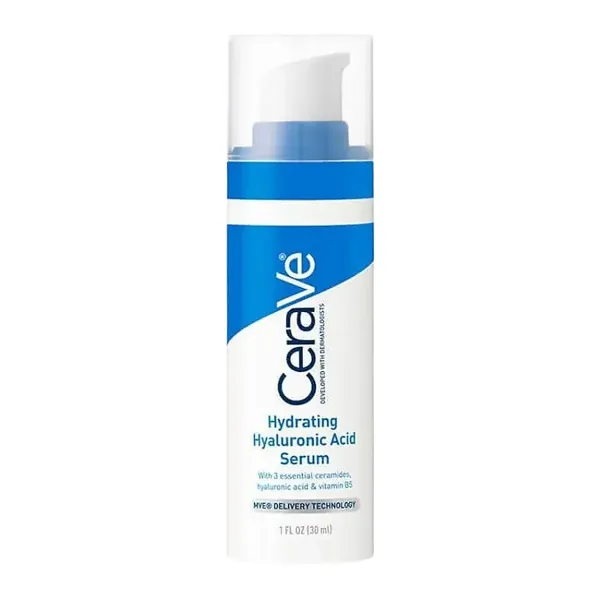
Skin naturally produces ceramides, but the supply drops with age, sun exposure, and repeated use of strong actives or unregulated bleaching creams sold in local markets. Topically, ceramides are usually paired with humectants like hyaluronic acid so they can both draw in and seal moisture in one step. The CeraVe Hydrating Hyaluronic Acid Serum is built on CeraVe's signature formulation of three essential ceramides plus hyaluronic acid, applied under a moisturizer to reinforce a weakened barrier — a genuinely different job from anything niacinamide does on its own.
Niacinamide vs Ceramides: The Real Differences
The core difference isn't strength, it's category. Niacinamide is an active that changes function — oil output, tone, pore appearance — and shows measurable results after four to eight weeks of consistent use. Ceramides are structural lipids that restore what's already meant to be in your skin; benefits like less tightness, less redness and less flaking can often be felt within days, because you're not waiting on a biological process, you're replacing a missing material.
They also aren't competing ingredients. A niacinamide serum won't fix a cracked, compromised barrier, and a ceramide moisturizer won't fade a stubborn dark mark or shrink an enlarged pore. Many well-formulated products blur the line anyway — niacinamide serums are frequently paired with barrier-supportive extras, and ceramide moisturizers sometimes include a low percentage of niacinamide for a mild brightening bonus. The honest way to think about it: niacinamide is what you apply to treat a concern, ceramides are what you apply to protect the skin that concern lives on.
| Product | What It Is | Price (PKR) | Best For |
|---|---|---|---|
| The Ordinary Niacinamide 10% + Zinc 1% – 30ml | Classic 10% Niacinamide | See current price on the linked product page | Oily, pigmented, acne-prone skin |
| CeraVe Hydrating Hyaluronic Acid Serum – 30 ml | Ceramide + HA Barrier Serum | See current price on the linked product page | Dry, reactive, winter skin |
| Cosrx The Niacinamide 15 Serum/20Ml | High-Strength 15% Niacinamide | See current price on the linked product page | Stubborn oil, large pores |
| Simple Booster Serum 10% Niacinamide (Vitamin B3) | Gentle 10% Niacinamide | See current price on the linked product page | Sensitive, beginner skin |
| The Ordinary Niacinamide 10% + Zinc 1% – 60ml | Value-Size 10% Niacinamide | See current price on the linked product page | Long-term daily users |
Prices correct as of July 2026. Cash on Delivery available across Pakistan.
Which One Does Your Skin Need First?
If your main complaints are oiliness, visible pores, blackheads or leftover marks from breakouts — common in Karachi's humidity, where oil production runs higher year-round — start with niacinamide. A 10% formula like The Ordinary Niacinamide 10% + Zinc 1% or the gentler Simple Booster Serum 10% Niacinamide is the right entry point.
If your skin is tight, flaky, easily irritated, sunburnt, or reacting to retinol, AHAs or BHAs — or it's peak winter in Lahore or Islamabad and your skin feels papery — ceramides come first. Calm and reinforce the barrier for one to two weeks with a ceramide-based serum or moisturizer before layering in an active. Skin that's mid-"purge" from a new exfoliant, or recovering from aggressive local-market whitening treatments, falls into this group too.
Combination or normal skin with mild oiliness and seasonal dryness doesn't have to choose — niacinamide serum in the morning routine, ceramide moisturizer to finish, works for most people most of the year.
How to Layer Niacinamide and Ceramides in One Routine
Niacinamide and ceramides don't conflict, so there's no need to alternate days or split them across AM and PM routines. Cleanse with a gentle, non-stripping cleanser, apply niacinamide serum to slightly damp skin, and wait one to two minutes for it to absorb before layering anything else. Follow with a ceramide-rich moisturizer or serum to seal everything in and hold onto that hydration. In the morning, sunscreen goes on last — non-negotiable given Pakistan's sun exposure, since unprotected skin undoes the work of both ingredients within weeks.
- Start with a 5-10% niacinamide serum once daily, building up to twice daily as your skin adjusts.
- Apply ceramide products on top of, not underneath, active serums — their job is to seal, not to penetrate deeper.
- Skip the niacinamide step on nights you use a strong exfoliating acid; let the ceramide step do the repair work instead.
- In humid Karachi weather, a lighter ceramide serum such as CeraVe Hydrating Hyaluronic Acid Serum is usually enough without a heavy cream layered on top.
Who Should Prioritize Ceramides (and Who Should Wait on Niacinamide)
Eczema-prone, rosacea-prone and chronically dry skin should reach for ceramides before adding any active, including niacinamide. The same goes for anyone dealing with "cracked" winter skin in Lahore or Islamabad, post-tretinoin or post-retinol irritation, or a barrier weakened by years of harsh local soaps and unregulated bleaching creams — a genuine risk in the local market, where such products are rarely labeled accurately.
For these skin types, spend one to two weeks on ceramide repair alone, then reintroduce niacinamide at a lower 5% concentration before working up to 10%. If a 10% formula stings or causes noticeable flushing even after the barrier has settled, that's usually a sign to dilute it by mixing with moisturizer, or to buy only from a verified source — diluted or counterfeit niacinamide bought from unverified local sellers is a common reason people assume the ingredient "doesn't work" for them, when the real issue was a fake batch.
Common Mistakes
- Applying a 10% niacinamide serum straight onto flaking, compromised skin — it often stings and makes redness worse instead of better.
- Assuming a moisturizer contains ceramides just because the brand is known for them — check the ingredient list for ceramide NP, AP or EOP.
- Buying niacinamide from unverified local sellers; flushing, pilling, or zero results after weeks usually points to a diluted or fake batch, not the ingredient failing.
- Skipping a proper moisturizer after niacinamide serum, especially through Lahore and Islamabad's dry winters — niacinamide doesn't replace the lipids skin loses to cold, dry air.
- Expecting a ceramide-based cream to fade dark spots or acne marks — ceramides repair the barrier, they don't treat pigmentation the way niacinamide does.
Shop BigBasket.pk
Products Featured in This Article
100% authentic — Cash on Delivery across Pakistan



Frequently Asked Questions
Can I use niacinamide and ceramides together?+
Yes — they don't conflict and work best together. Apply niacinamide serum first on cleansed, slightly damp skin, then follow with a ceramide-rich moisturizer or serum like CeraVe Hydrating Hyaluronic Acid Serum to seal it in. There's no need to alternate them across different days or times.
Which is better for oily, acne-prone skin in Pakistan's humid weather?+
Niacinamide, especially in Karachi's year-round humidity where excess oil and enlarged pores are the bigger concern. A 10% formula like The Ordinary Niacinamide 10% + Zinc 1% (See current price on the linked product page for 30ml) controls sebum and fades post-acne marks; add a lightweight ceramide serum only if your skin also feels dehydrated underneath the oil.
Does CeraVe contain ceramides or niacinamide?+
CeraVe's formulas are built around its signature three essential ceramides, not niacinamide — that's the brand's core barrier-repair technology. Products like the CeraVe Hydrating Hyaluronic Acid Serum (See current price on the linked product page) pair those ceramides with hyaluronic acid rather than niacinamide.
What niacinamide percentage should a beginner use?+
Start at 5-10%. Both The Ordinary Niacinamide 10% + Zinc 1% and Simple Booster Serum 10% Niacinamide are formulated at a beginner-safe 10%; if your skin is reactive, patch-test on the jaw for two to three nights before applying it to your full face.
How long does it take to see results from niacinamide vs ceramides?+
Ceramides work faster for comfort — less tightness and flaking can be noticeable within days because you're replacing a missing material. Niacinamide takes longer, typically four to eight weeks of consistent daily use, because it has to change oil production and pigment turnover rather than just sit on the skin.
The Short Version
TL;DR: Niacinamide treats oil, pores and pigmentation as an active ingredient, while ceramides are lipids that repair and seal the skin barrier — most people eventually need both, just in the right order. Oily, pigmented or humid-climate skin should start with a niacinamide serum such as The Ordinary Niacinamide 10% + Zinc 1%; dry, reactive or winter-damaged skin should start with a ceramide-rich option like CeraVe Hydrating Hyaluronic Acid Serum.
Related Reading
- → Vitamin C vs Niacinamide: Best Garnier Serum for Your Skin
- → Niacinamide and Vitamin C Together — Can You Mix Them for Pakistani Skin?
- → Niacinamide vs Alpha Arbutin: Which Brightens Skin Better?
- → Niacinamide for Acne & Dark Spots — Does It Work for Pakistani Skin?
- → Eveline vs The Ordinary Niacinamide: Which Serum Wins?
- → Hair Oil vs Hair Serum: Which One Does Your Hair Need?
Price note: Prices mentioned in this guide are snapshots and may change. The linked product page shows the current BigBasket.pk price and availability.