




Key Takeaway
Applying hair colour at home in Pakistan comes down to three things: a 48-hour patch test, sectioning your hair, and timing it exactly as the box says.
You can apply hair colour at home in Pakistan safely and get salon-close results by getting three things right: a 48-hour patch test, sectioning your hair before you mix anything, and timing the processing exactly as the box says — not a minute longer. Most home-colour disasters (patchy roots, brassy ends, scalp irritation) come from skipping one of those three steps, not from the product itself.
This guide walks through the full process end to end — from picking the right shade level for naturally dark Pakistani hair to what actually protects the colour once you step out into Karachi humidity or Lahore's dry winter air.
How Home Hair Colour Actually Works
Permanent home hair colour — the type in a box like L'Oréal Paris Excellence Creme — works through a two-part chemical reaction, not a surface stain. You mix the colour cream with a developer (hydrogen peroxide, usually 20 or 30 volume in home kits), and that developer does two jobs at once: it opens the hair's outer cuticle so colour molecules can get inside, and it lifts (lightens) your natural pigment so the new colour has room to show.
Once inside the hair shaft, the small dye molecules combine into larger ones that get trapped in the cortex — that's why permanent colour doesn't wash out the way henna or a semi-permanent gloss does. It fades gradually over weeks as the cuticle wears down and the outer layer of colour molecules oxidises and breaks apart.
This is also why timing matters so much. The developer keeps lifting and depositing colour for as long as it's active, which is why the processing time printed on the box (usually 30-45 minutes) is a chemistry instruction, not a suggestion — leaving it on longer doesn't make the colour "more", it just keeps damaging the cuticle after the colour has already fully deposited.
Before You Start: Patch Test, Strand Test and the Henna Problem
Every box of permanent colour includes a patch test for a reason: PPD (para-phenylenediamine), the ingredient responsible for rich, long-lasting colour in most permanent dyes, can trigger allergic reactions in a small percentage of people — including delayed reactions that show up hours later. Mix a small amount of colour and developer, dab it behind your ear or on your inner elbow, and wait 48 hours before going anywhere near your whole head.
The second test matters more in Pakistan than almost anywhere else: the henna check. If you've ever used mehndi or a henna-based hair colour — even months ago — do a strand test on a small, hidden section before committing to a full application. Henna coats and stains the hair shaft rather than penetrating it, and some packaged "henna" products sold locally contain metallic salts that react unpredictably with oxidative dye: hair can turn green, go patchy, process too fast, or feel like straw afterward. Clip a small section, colour it exactly per the box instructions, and check the result before touching your whole head.
Also skip washing your hair the morning of colouring. A day or two of natural scalp oil acts as a mild barrier against irritation from the developer sitting directly on your scalp during application.
Step-by-Step: Applying Colour at Home
Once your patch and strand tests are clear, the process itself is straightforward if you follow it in order:
- Section first. Part hair into four quadrants (front-left, front-right, back-left, back-right) and clip each section up. This is the single biggest difference between even, salon-close colour and patchy DIY colour — applying without sectioning almost always leaves the nape and hairline under-saturated.
- Mix only what you'll use immediately. Combine the colour cream and developer in the ratio printed on the box (typically 1:1) right before application — the mixture starts working the moment it's combined and can't be saved for later.
- Roots first, if you're covering regrowth. Apply to the roots first since scalp warmth speeds up processing there. Pull colour through to mid-lengths and ends in the last 10-15 minutes, since previously coloured ends absorb colour faster than virgin roots.
- Set a timer for the exact time on the box — not the estimate implied by the packaging photo, the manufacturer's stated minutes.
- Rinse with lukewarm water until it runs clear, then use the sachet conditioner included in the box for that first wash. Skip shampoo for 24-48 hours to let the cuticle start closing back down.
| Product | What It Is | Price (PKR) | Best For |
|---|---|---|---|
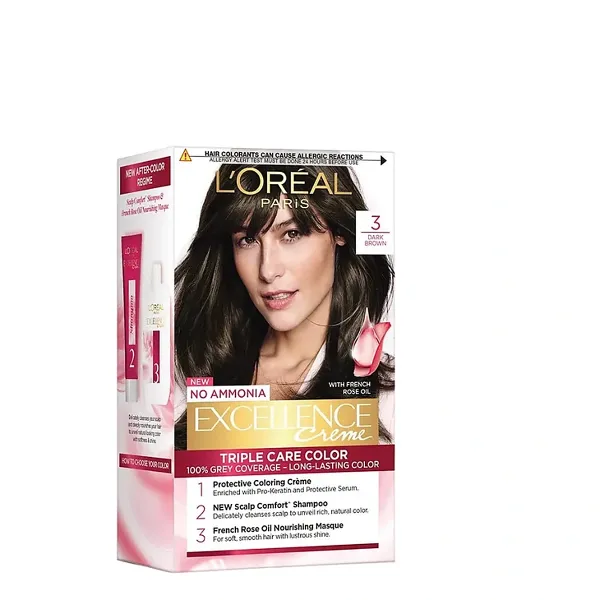
| Loreal Paris Excellence Creme Hair Colour #3 Dark Brown | Dark Brown #3 | See current price on the linked product page | Deepening black hair naturally |
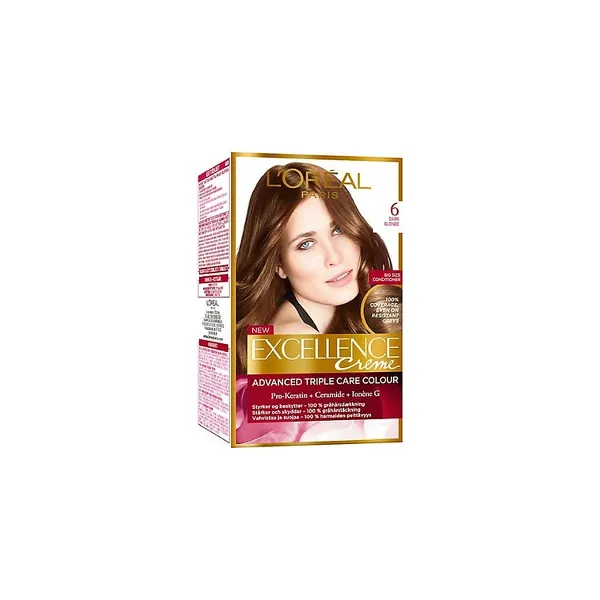
| Loreal Excellence Creme Hair Colour #6 Dark Blonde | Dark Blonde #6 | See current price on the linked product page | Warming previously lightened hair |
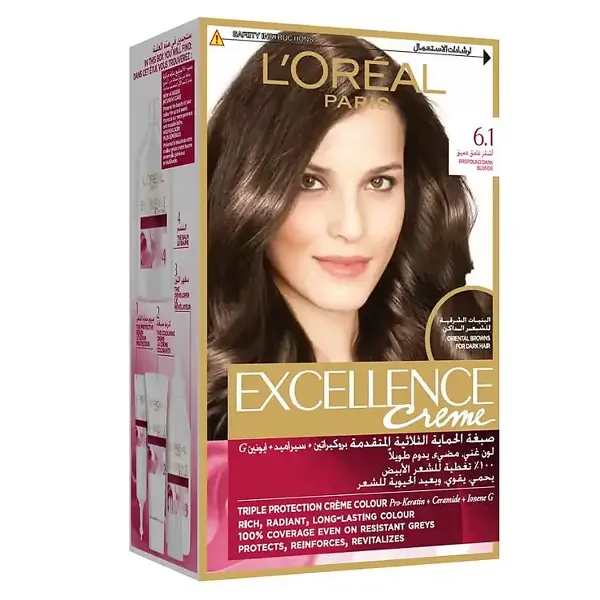
| Loreal Paris Excellence Creme Hair Colour #6.1 Dark Ash Blonde | Dark Ash Blonde #6.1 | See current price on the linked product page | Neutralising brassy warm tones |
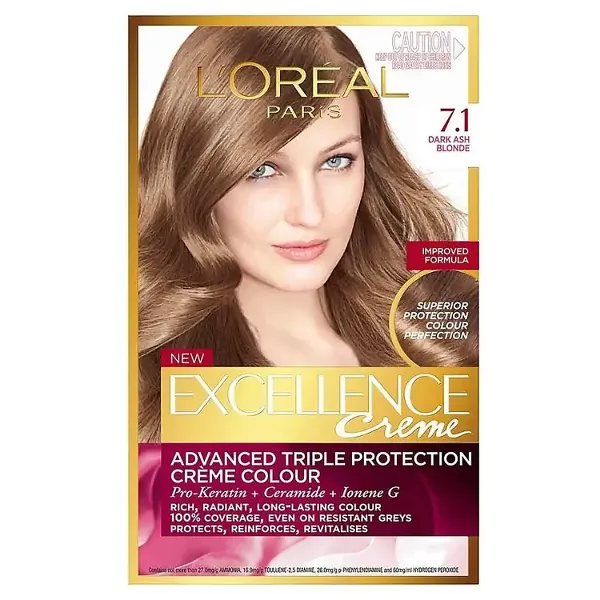
| Loreal Paris Excellence Creme Hair Colour #7.1 Ash Blonde | Ash Blonde #7.1 | See current price on the linked product page | Cool-toned all-over blonde |
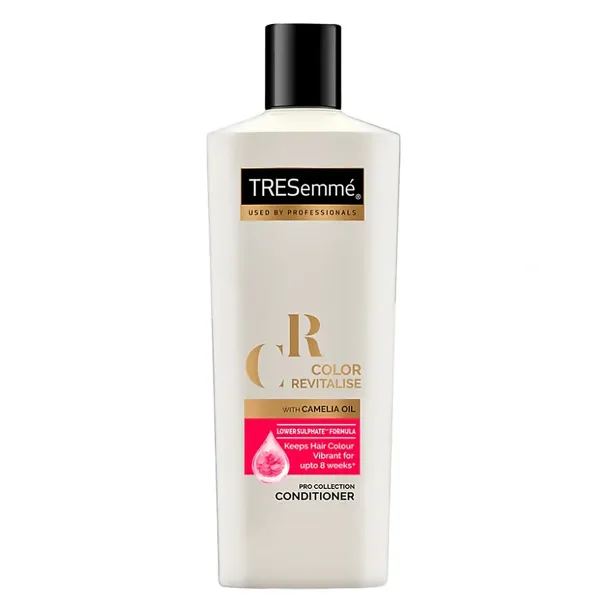
| Tresemme Colour Revitalize Conditioner - 360ML | Colour Revitalize Conditioner | See current price on the linked product page | Daily post-colour fade protection |
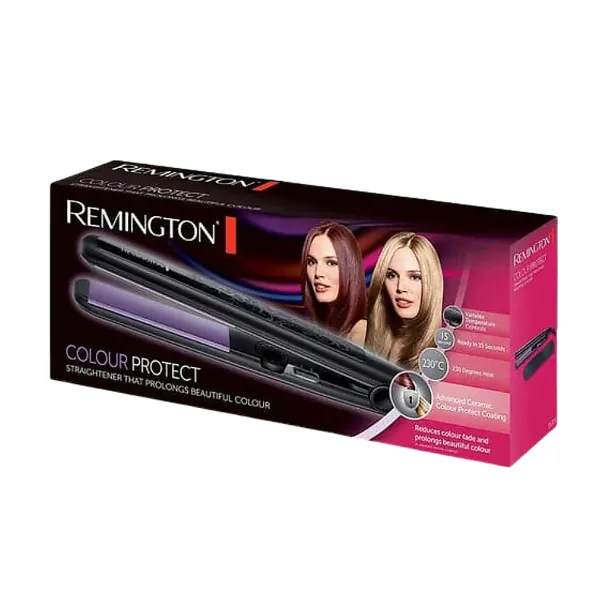
| Remington Hair Straightener Colour Protect - S6300 | Colour Protect Straightener | See current price on the linked product page | Heat styling without colour damage |
Prices correct as of July 2026. Cash on Delivery available across Pakistan.
Choosing the Right Shade Level for Pakistani Hair
Most Pakistani hair sits at natural level 2-4 on the international colour scale (black to dark brown), which changes what a box shade will realistically look like on you. A box labelled "ash blonde" won't turn black hair into that exact swatch photo in one application — going from a level 2-3 to a level 7 like L'Oréal Paris Excellence Creme #7.1 Ash Blonde is a multi-session lightening process, not a single-box job, and forcing it with a stronger developer than the box specifies risks serious breakage.
What single-box permanent colour does reliably well on dark Asian hair is depth and tone shifts within a few levels: covering grey, deepening black to a soft dark brown (#3), or adding richness with a dark blonde (#6) for hair that's already been previously lightened.
Undertone matters too. Warmer wheatish and tan skin tones generally carry warm-to-neutral brown and gold shades well, while cooler or deeper brown skin tones often look better in ash-based shades like #6.1 Dark Ash Blonde, which neutralise the orange or brassy tones that naturally dark hair tends to pull when it lifts.
Tools and Products You Actually Need
Beyond what's in the box (gloves, developer, colour cream, and usually a sachet conditioner), you need very little for a clean application: two-to-four sectioning clips, an old towel or cape you don't mind staining, and a barrier — petroleum jelly along your hairline and ears keeps colour from staining skin.
Where most people over-buy is developer strength and extra tools they don't need for a basic root touch-up or all-over colour — a tint brush helps, but a gloved hand works fine for most home applications described on the box.
Where it's worth spending is on what happens after the colour sets. A colour-safe conditioner matters more for how long the colour looks fresh than almost anything else in the process, since ordinary shampoo and hard water strip oxidised colour molecules out of the cuticle faster than plain wear. If you blow-dry regularly, doing it on a lower heat setting for the first week or two — a multi-speed dryer like the Home.Co 5-in-1 Hair Dryer gives you that control — reduces how fast freshly processed colour fades compared with a single high-heat-only setting.
Aftercare: Making Colour Last Through Karachi Humidity and Lahore Winters
Colour-treated hair fades faster in Pakistan's climate extremes than in a controlled salon environment. Karachi's humidity swells the cuticle open more than dry air does, letting colour molecules leach out faster with every wash; Lahore and Islamabad's dry winter air pulls moisture from the hair shaft, leaving colour looking duller and the ends more prone to breakage where colour meets natural regrowth.
Two habits make the biggest difference after the first wash. First, switch to a conditioner built for coloured hair rather than a generic one — Tresemme Colour Revitalize Conditioner (360ml) is formulated to help lock in colour vibrancy and reduce the fade that hard water and sun exposure cause. Second, keep hot tools away from colour-fresh hair for the first 48-72 hours, and once you do resume straightening, a plate designed for colour protection — like the Remington Colour Protect Straightener S6300, which uses ceramic-titanium plates to reduce the heat damage that fades colour fastest at the ends — does noticeably less damage over repeated use than a basic flat iron on high heat.
Sun exposure matters too: colour, especially lighter or ash tones, oxidises and turns brassy faster under direct sun, so a light scarf or dupatta over freshly coloured hair during peak afternoon hours in summer isn't just cultural — it's genuinely protective.
Common Mistakes
- Skipping the patch test and risking an allergic reaction to PPD in the dye
- Colouring over henna without a strand test first — it can turn hair green, orange, or process unevenly
- Not sectioning hair, which leaves the nape and hairline patchy and under-saturated
- Leaving colour on longer than the box states, thinking it'll go darker — it just damages hair without adding tone
- Shampooing hair right before colouring, or shampooing immediately after instead of rinsing with water only
- Applying colour to already-coloured ends the same way as virgin roots, causing over-processing and breakage
Shop BigBasket.pk
Products Featured in This Article
100% authentic — Cash on Delivery across Pakistan
Frequently Asked Questions
Can I apply hair colour at home safely in Pakistan?+
Yes — permanent creme colours like L'Oréal Paris Excellence Creme (See current price on the linked product page) are designed for home use, with a mixing bottle, gloves, and step-by-step instructions in the box. Safety comes down to doing the 48-hour patch test first and following the exact processing time on the box, not skipping steps to save time.
How long does home hair colour last before it fades?+
Typically 4-6 weeks before roots show and colour starts visibly fading, often faster in Karachi's humidity and sun exposure. Using a colour-safe conditioner like Tresemme Colour Revitalize (See current price on the linked product page) after every wash noticeably extends how long the colour stays vibrant.
Can I dye my hair at home if I've used henna before?+
Do a strand test first. Henna coats the hair shaft with dye that chemical colour can react with unpredictably, sometimes turning hair green or orange, or processing unevenly. If the strand test looks off, wait for the henna to grow out rather than applying box colour to fully henna-treated hair.
How many boxes of hair colour do I need for below-shoulder length hair?+
A single box of L'Oréal Paris Excellence Creme generally covers short-to-medium hair. Long or thick hair below shoulder length usually needs two boxes to fully saturate roots to ends, so check your hair's length and thickness against the coverage guide on the box before buying.
Do I need a stronger developer for very dark Pakistani hair to reach blonde?+
No — stick to the developer included in the box. Lifting very dark or black hair to a much lighter shade like ash blonde in one session isn't realistic with a single box, and forcing it with a stronger-than-recommended developer risks severe breakage. Plan on a gradual, multi-session lightening process instead.
Can I straighten or blow-dry my hair right after colouring?+
Wait at least 48-72 hours and let the cuticle fully seal before heat styling. When you do resume styling, a colour-protect flat iron like the Remington S6300 (See current price on the linked product page) reduces the heat-related fade that plain plates cause at the ends.
The Short Version
TL;DR: Patch test 48 hours before, strand test if you've ever used henna, section hair into four parts, apply roots first, and process for the exact time stated on the box — not longer. For naturally dark Pakistani hair, a permanent creme like L'Oréal Paris Excellence Creme #3 Dark Brown gives reliable depth in one session; protect the result afterward with a colour-safe routine from our hair care range.
Related Reading
- → Salon vs At-Home Hair Colour: Which Gives Better Results?
- → Ammonia vs Ammonia-Free Hair Colour: Which Is Safer?
- → Grey Hair Coverage: A Beginner's Guide for Pakistani Hair
- → Best Hair Colour at Home in Pakistan 2026
- → Revlon Hair Colour Shades & Price in Pakistan 2026
- → Top 10 Hair Colour Brands in Pakistan 2026 (With Prices)
- → Hair Dye Patch Test: How to Check for Allergies at Home
Price note: Prices mentioned in this guide are snapshots and may change. The linked product page shows the current BigBasket.pk price and availability.