




Key Takeaway
Patch testing means applying a small amount of hair removal cream to a small area of skin and waiting 24-48 hours to check for redness, itching or burning before full use.
To patch test hair removal cream correctly, apply a small, coin-sized amount to a discreet area of skin — usually the inner elbow or behind the knee — leave it on for the time stated on the pack (typically 3-6 minutes, never longer), rinse it off, then wait 24 to 48 hours before using the cream anywhere else on your body. If the skin stays calm the whole time — no redness, burning, itching, swelling or blistering — it's safe to use on larger areas like legs, underarms or the bikini line.
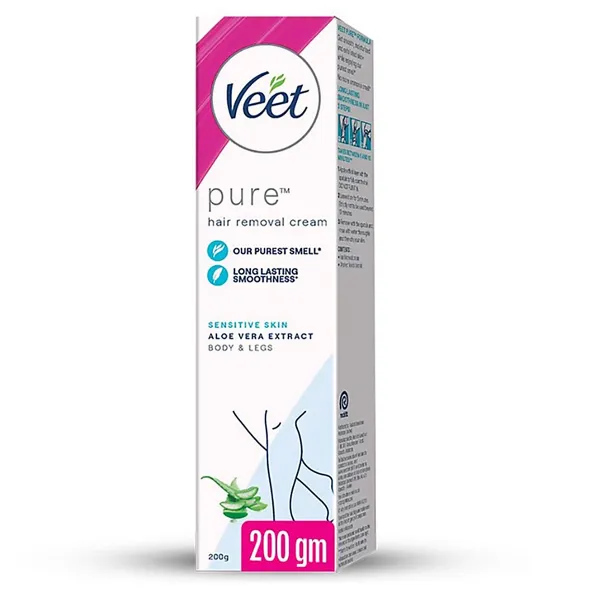
This step matters more in Pakistan than the fine print on the box suggests: humid Karachi summers, dry Lahore and Islamabad winters, and a wide range of skin tones and sensitivities all change how a depilatory cream behaves on real skin. BigBasket.pk stocks Veet Hair Removal Cream with Aloe Vera, and this guide walks through exactly how to patch test it — or any hair removal cream — before your first full application.
Why Patch Testing Hair Removal Cream Matters
Hair removal creams (depilatories) work through chemistry, not blades. The active ingredient — usually calcium thioglycolate or a related thioglycolate compound — is formulated at a high pH (around 11-12) that breaks down the disulfide bonds holding keratin protein together in the hair shaft, so the hair essentially dissolves and wipes away at skin level. That same chemical reaction that breaks down hair protein can also irritate skin protein, especially on areas with thinner skin (bikini line, underarms) or on skin already compromised by sunburn, recent waxing, shaving nicks, or heavy exfoliation.
Two different things can go wrong, and a patch test catches both. Irritant contact dermatitis is a direct chemical reaction that can happen to anyone if the cream is left on too long or applied to broken skin. Allergic contact dermatitis is a genuine allergy to an ingredient in the formula — it can develop even in someone who has used the same cream before without issue, because sensitisation can build up over repeated exposure. A 48-hour patch test is the only reliable way to catch either reaction before it happens on a large, visible area like your legs or underarms rather than a hidden test patch.
How to Patch Test Hair Removal Cream: Step-by-Step
The process is the same regardless of brand, and it takes under ten minutes of active time:
- Choose a small, unbroken area of skin close to where you intend to use the cream — the inner forearm, the crease of the inner elbow, or the back of the knee are standard choices.
- Clean the area with plain water and pat dry. Skip lotion, perfume, deodorant or exfoliating scrub on that spot for at least 24 hours beforehand.
- Apply a small, coin-sized amount of the cream exactly as you would for real use — don't rub it in harder or thinner than the pack instructs.
- Leave it on for the exact time stated on the packaging (for Veet Hair Removal Cream, this is typically 3-6 minutes — check your specific pack, as timing varies by formula and skin type). Never extend the time to "test more thoroughly."
- Rinse off with lukewarm water only, no soap, and pat the area dry without rubbing.
- Leave the patch completely alone for 24-48 hours — no moisturiser, no makeup, no further product on that spot — and check it periodically.
If you're testing for a first-time bikini, underarm or facial use, note that skin sensitivity is area-specific: passing a test on your forearm doesn't fully guarantee zero reaction on more delicate skin, but it does rule out a true allergy to the formula itself, which is the more serious risk.
What Counts as a Pass vs a Fail
Check the patch at three points: immediately after rinsing, at the one-hour mark, and again at 24 and 48 hours. A pass means the skin looks and feels exactly like the surrounding, untreated skin at every check — no colour change, no texture change, no sensation beyond maybe very mild, fleeting warmth right after rinsing.
A fail is any of the following, at any point in the 48-hour window: redness that doesn't fade within an hour, itching, stinging or burning that continues after rinsing, swelling, small raised bumps, a rash extending beyond the exact patch area, or blistering or peeling skin. Delayed reactions matter as much as immediate ones — thioglycolate allergies in particular can take 12-24 hours to show up, which is exactly why rushing the test, or skipping it because "it felt fine right after," defeats the purpose.
If the patch fails at any stage, don't use the cream on any other part of your body, even if the failed area was small. Rinse the reacting skin with cool water, avoid scratching, and let it settle without adding new products on top of it. A single failed patch test on one cream doesn't mean all hair removal creams will react the same way — different brands use different thioglycolate concentrations and buffering ingredients — but it does mean that specific formula isn't right for your skin.
| Product | What It Is | Price (PKR) | Best For |
|---|---|---|---|
| Veet Hair Removal Cream – Aloe Vera 100 g / 200 g | The cream itself | See current price on the linked product page | Legs, underarms, bikini line |
| Facial Beauty - 3Pcs Eyebrow Razor For Body Facial Hair Removal | Chemical-free alternative | See current price on the linked product page | Sensitive skin or failed patch test |
| CeraVe SA Body Wash FOr Rough & Bumpy Skin – 296ml | Pre-hair-removal body wash | See current price on the linked product page | Rough, bumpy or keratosis-prone skin |
Prices correct as of July 2026. Cash on Delivery available across Pakistan.
Who Should Never Skip the Patch Test
Technically, everyone should patch test every single time, but in practice some situations make it non-negotiable:
- First-time users of any hair removal cream, regardless of how "gentle" or "for sensitive skin" the label claims.
- Anyone switching brands or formulas — moving from a regular formula to a sensitive-skin one, or between two different brands, changes the exact blend of thioglycolates and fragrance.
- Anyone with a history of skin allergies, eczema, psoriasis, or a reaction to hair dye, nail glue, or other cosmetic chemicals — a pattern of sensitivity to one chemical class often predicts sensitivity to others.
- Bikini line, underarm and facial use, where skin is thinner and more reactive than legs or arms, even if the same brand has been used elsewhere on the body without issue.
- Anyone testing a cream bought loose or from an unfamiliar seller — in Pakistan's local markets, counterfeit or reformulated stock is a real risk, and an altered formula behaves unpredictably even if the packaging looks identical to the genuine product.
Buying from a source that guarantees authentic, sealed stock with correct batch coding — and Cash on Delivery so you can inspect before paying — removes one variable, but it still doesn't replace the patch test itself.
If Your Skin Reacts: Aftercare and Alternatives
If the patch test fails, the immediate steps are simple: rinse the area with cool, not hot, water, pat it dry, and leave it bare — no fragranced lotion, no makeup, no further exfoliation — until the redness and irritation fully settle, usually within a day or two. Avoid direct sun on the area while it's healing, since irritated skin burns and pigments more easily, which matters in Pakistan's high-UV climate for most of the year. If swelling, blistering or the reaction spreads beyond the test patch, that's a sign to stop and see a dermatologist rather than self-treat.
For the underlying issue — needing hair removal that skin can't tolerate a depilatory cream for — a physical method sidesteps the chemistry entirely. A facial and body eyebrow razor removes hair by cutting it at the surface rather than dissolving it chemically, so there's no thioglycolate exposure and no patch test required — a reasonable fallback for eyebrows, upper lip, jawline or other small areas where a cream reaction is more likely.
Separately, if the reason you're reaching for hair removal cream is rough, bumpy skin on the arms or thighs rather than sensitivity, a body wash formulated for texture — like CeraVe SA Body Wash for Rough & Bumpy Skin — can smooth the skin surface as part of the routine, making cream application more even once a patch test does pass.
Patch Testing for Different Areas: Bikini Line, Face and Underarms
Not all skin on your body reacts the same way, which is why a single patch test on your forearm isn't the full picture for every use case. The bikini line and underarms have thinner skin, more friction, and higher moisture exposure than legs or arms — all of which make irritation more likely and more uncomfortable if it happens. If you're planning to use a cream in these areas for the first time, do a second, area-specific check: test a small patch just outside the intended zone, never on mucous membranes or genital skin itself, and extend your observation window to the full 48 hours before proceeding.
Facial hair removal creams are a separate category from body formulas and are generally milder, but face skin — particularly around the upper lip and jaw — is thinner and more visible if something goes wrong, so the same patch-and-wait rule applies without shortcuts. As a rule, never use a body-formula depilatory cream on facial skin unless the packaging specifically states it's safe for face use.
Climate plays a role too: humid weather in Karachi can make skin more prone to irritation from occlusive creams left on too long, while dry winter air in Lahore or Islamabad can leave skin more reactive and prone to micro-cracking, which changes how a depilatory penetrates. Neither is a reason to skip hair removal cream altogether — it's a reason to always run the test again for a new area, a new season, or a new formula.
Common Mistakes
- Skipping the patch test after switching to a new formula or brand, even if an older cream never caused a reaction
- Testing for only a minute or two instead of leaving the cream on the patch for the full time stated on the pack
- Checking the result too soon — some reactions only show up after 24-48 hours, not immediately after rinsing
- Patch testing on the hand or wrist instead of an area closer to where the cream will actually be used
- Applying moisturiser, perfume or exfoliating scrub over the test patch, which can mask or worsen a reaction
- Using the cream on broken, sunburnt, freshly waxed or recently shaved skin to save time instead of waiting for skin to fully heal
Shop BigBasket.pk
Products Featured in This Article
100% authentic — Cash on Delivery across Pakistan


Frequently Asked Questions
How long should I patch test hair removal cream before using it?+
Leave the cream on the patch for exactly the time stated on the pack — usually 3-6 minutes for Veet Hair Removal Cream — then rinse it off and wait 24-48 hours before judging the result. Some reactions take a full day to appear, so checking after just an hour isn't enough.
Where on the body should I do the patch test?+
Use a small area close to where you'll actually use the cream and away from broken or sunburnt skin — the inner forearm, inner elbow crease or behind the knee are the standard spots. For facial or bikini-line use, test on skin near, but not on, that same area, since sensitivity varies by body part.
What does a failed patch test look like?+
A failed patch test looks like redness that doesn't fade within an hour, itching, burning, stinging, swelling, small bumps or blistering on or around the tested patch. If any of these appear, rinse with cool water immediately, don't use the cream anywhere else, and consider a physical alternative like an eyebrow or body razor instead.
Do I need to patch test every time, or just the first time?+
Patch test the first time you use a specific cream, and again whenever you switch brands, switch formulas, or haven't used it in several months. Skin sensitivity and product formulations can both change, so a past pass doesn't guarantee a future one.
Can I patch test on the same day I plan to remove hair?+
No — because a reaction can take 24-48 hours to appear, patch test at least a day, ideally two, before the day you actually plan to use the cream on a larger area. Testing the same morning you plan to remove hair defeats the purpose of the wait.
Is Veet Hair Removal Cream safe for sensitive skin in Pakistan's climate?+
Veet Hair Removal Cream with Aloe Vera, available on BigBasket.pk, is formulated for legs, underarms and bikini line, but sensitivity is individual rather than universal. Humidity in Karachi or dry winter air in Lahore and Islamabad can both change how skin reacts, which is exactly why the patch test step matters regardless of how mild a formula claims to be.
The Short Version
TL;DR: Dab a small amount of hair removal cream on your inner elbow, leave it for the time stated on the pack, rinse, and wait 24-48 hours before using it anywhere else — if the patch stays calm, you're clear to use Veet Hair Removal Cream on legs, underarms or bikini line; if it reacts, skip the cream and browse chemical-free options in our Body Care range instead.
Related Reading
- → Best Hair Removal Cream in Pakistan: Honest Buying Guide
- → Nisa Hair Removal Cream Price in Pakistan (2026 Guide)
- → Ecrin Hair Removal Spray Price in Pakistan (And a Better Option)
- → Best Hair Removal Sprays & Creams in Pakistan
- → Veet vs Waxing vs Razor: Best Hair Removal in Pakistan
- → Rica Wax Price in Pakistan: Real Costs, Fakes & Alternatives
Price note: Prices mentioned in this guide are snapshots and may change. The linked product page shows the current BigBasket.pk price and availability.