




Key Takeaway
Chemical sunscreen sinks in invisibly and suits daily wear; mineral sunscreen protects sensitive or reactive wheatish skin better but needs careful blending to avoid cast.
For wheatish skin in Pakistan, the honest short answer is: chemical sunscreens sink in clear and suit daily wear regardless of tone, while mineral sunscreens are the gentler, safer pick for sensitive, reactive or post-treatment skin — provided you apply enough to avoid the grey-white cast that under-blended mineral formulas can leave on medium-to-deep complexions. Deciding between chemical vs mineral sunscreen for wheatish skin pakistan comes down less to marketing claims and more to your skin type, oil levels, and how much real midday sun you get in Karachi, Lahore or Islamabad.
Chemical vs Mineral Sunscreen: What's Actually Different
Chemical sunscreens work by absorbing UV rays through filters like avobenzone, octocrylene, homosalate and octisalate, converting that energy into small amounts of heat that release from the skin. They need about 15-20 minutes after application to start working, sink in without a visible layer, and usually feel lighter or more fluid on the skin. Mineral (also called physical) sunscreens use zinc oxide, titanium dioxide, or both, sitting on top of the skin to reflect and scatter UV rays. They start working the moment they're applied, tend to feel slightly thicker or more balm-like, and are generally the gentler option for reactive or post-treatment skin.
Both filter types, when formulated as broad spectrum, protect against UVA (ageing, pigmentation) and UVB (burning) rays — the filter type doesn't decide whether a sunscreen is broad spectrum, the formulation does. What actually separates them for daily use in Pakistan is finish, feel, and how each interacts with melanin-rich, wheatish skin tones, which is where most of the real decision-making happens.
Why Wheatish Skin Tips the Decision
Wheatish skin in Pakistan usually carries warm, olive or golden undertones with a moderate-to-high melanin index. This matters because zinc oxide and titanium dioxide are naturally white pigments; on very fair skin they blend in easily, but on wheatish or tan skin, thick or under-applied mineral sunscreen can leave a faint grey-white cast, especially around the jawline, hairline and under fluorescent light or camera flash. It's not a myth, it's physics, but it's also largely fixable with the right formula and technique.
Newer mineral formulas use finer, more evenly milled zinc particles that sit sheerer on the skin than older, chalky sunscreens did, which is why sheer mineral options are worth seeking out specifically rather than assuming mineral automatically means visible white residue. Chemical sunscreens sidestep the cast issue completely since they sink in clear regardless of skin tone, which is exactly why many people with wheatish and deeper skin reach for a chemical formula for daily wear and keep a mineral sunscreen in rotation for sensitive days, breakouts, or after facials and peels when the skin barrier needs a gentler filter.
Mineral Sunscreens Worth Choosing for Wheatish Skin
For dry, sensitive or barrier-compromised wheatish skin, Cerave Hydrating Mineral Sunscreen SPF 50 Face Lotion is a strong pick — it pairs mineral zinc oxide and titanium dioxide filters with ceramides and niacinamide, protecting and repairing the skin barrier at the same time, which matters when skin gets tight or flaky in Lahore or Islamabad winters. La Roche-Posay Mineral Sunscreen SPF 50 is the fragrance-free, minimal-ingredient option worth reaching for if your skin reacts to chemical filters or fragrance — common for rosacea- or eczema-prone wheatish skin.
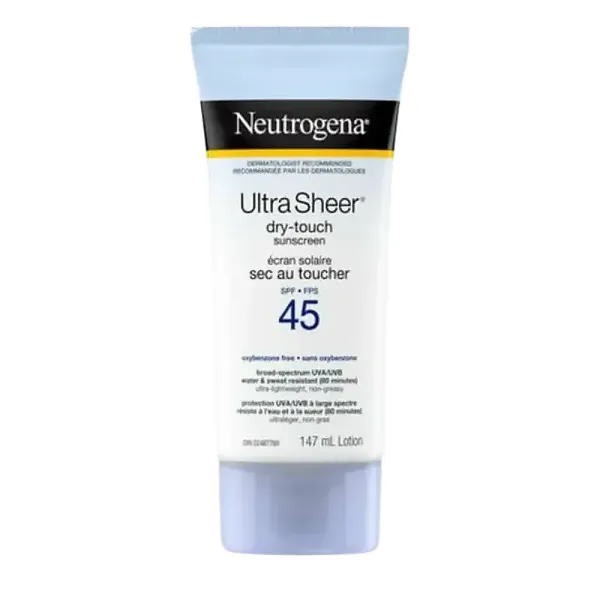
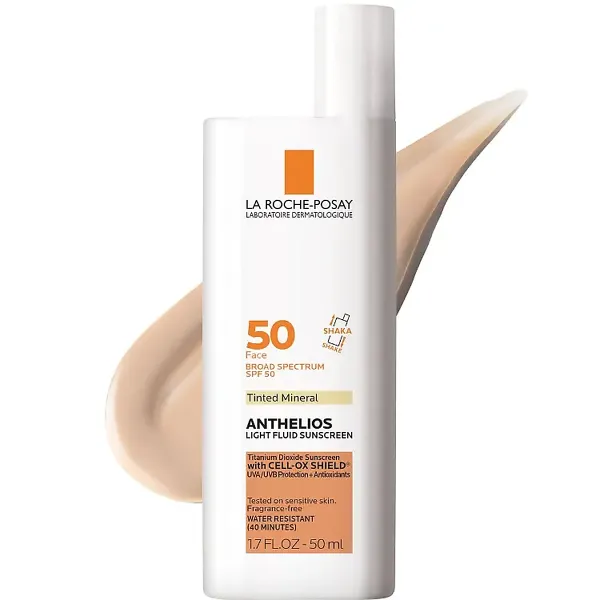
If a heavier mineral formula feels like too much in Karachi's humidity, La Roche-Posay Light Fluid Mineral Sunscreen SPF 50 offers the same physical filters in a lighter, faster-blending fluid. For a sheer, everyday zinc option, Neutrogena Sheer Zinc Sunscreen Broad Spectrum SPF 45 is formulated to sit sheerer than traditional mineral sunscreen, making it one of the more forgiving mineral picks for wheatish and tan skin. With any of these, apply a generous layer and blend in sections rather than rubbing thin — a thin layer is exactly what causes the cast.
Chemical Sunscreens for Everyday Pakistani Weather
Neutrogena Sunscreen Broad Spectrum SPF 50 is the reliable everyday chemical pick — it sinks in within minutes and leaves zero white cast on any depth of wheatish skin, working well alone or under makeup. The same range also comes in SPF 30 for lighter daily exposure and SPF 55 for longer outdoor stretches, so the SPF can match how much sun you're actually getting.
For oily or acne-prone wheatish skin, especially through Karachi's humid months, La Roche-Posay Dry Touch Sunscreen 60 SPF is built for exactly this — a chemical filter system finished matte and dry-touch, so it doesn't add shine or slip under a dupatta or mask by midday. If you'd rather combine moisturiser and sun protection in one step, Cetaphil Daily Facial Moisturizer with Sunscreen SPF 35 is a reasonable everyday option, though its SPF 15 version is too low to rely on if you're outdoors for more than a short commute.
| Product | What It Is | Price (PKR) | Best For |
|---|---|---|---|
| Cerave Hydrating Mineral Sunscreen SPF 50 Face Lotion | Hydrating mineral SPF50 | See current price on the linked product page | Dry, sensitive wheatish skin |
| Neutrogena Sunscreen Broad Spectrum SPF 50 | Chemical, no white cast | See current price on the linked product page | Everyday wear, all tones |
| La Roche-Posay Dry Touch Sunscreen 60 SPF | Chemical, matte dry-touch | See current price on the linked product page | Oily, humid-day skin |
| Neutrogena Sheer Zinc Sunscreen Broad Spectrum SPF 45 | Sheer zinc mineral | See current price on the linked product page | Sensitive, reactive skin |
| La Roche-Posay Mineral Sunscreen, SPF 50 | Fragrance-free mineral | See current price on the linked product page | Rosacea, eczema-prone skin |
| La Roche-Posay Light Fluid Mineral Sunscreen, SPF 50 | Lightweight mineral fluid | See current price on the linked product page | Combination skin, humidity |
Prices correct as of July 2026. Cash on Delivery available across Pakistan.
Matching Sunscreen to Your Skin Type and Day
Oily and acne-prone skin generally does better with either a dry-touch chemical sunscreen or a sheer zinc mineral formula — both avoid the extra shine and heaviness that thicker sunscreens can add by midday. Dry, sensitive, or eczema- and rosacea-prone skin leans mineral, ideally one built with barrier-supporting ingredients like ceramides or niacinamide, since these skins tend to react less to physical filters than to chemical ones.
If you're spending real time outdoors — a long commute, a wedding shoot, a beach trip or a visit to the northern areas — reach for a higher SPF and reapply, since even the best sunscreen degrades under direct sun and sweat. Neutrogena Sheer Zinc Dry-Touch Sunscreen SPF 70 is a solid choice for these longer, higher-exposure days since it combines a high SPF mineral filter with a dry finish. For makeup wearers, chemical fluids generally blend into foundation and tinted moisturiser more smoothly than mineral sunscreen, which can occasionally pill under heavier makeup. And if your skin has recently been through a facial, peel, laser session or is actively breaking out, mineral is the safer, lower-irritation choice until the barrier settles.
Applying and Reapplying in Pakistan's Climate
Most people apply far less sunscreen than the SPF on the label was tested with — the actual amount needed for the face and neck is about a quarter to half a teaspoon, roughly two finger-lengths of product squeezed onto your index and middle finger. Applying less than this doesn't just lower your protection proportionally; SPF testing is done at a fixed thickness, so a thin layer can drop real-world protection well below the number on the bottle.
In Karachi's humid, sweaty stretches and Lahore's peak summer heat, reapply every 2-3 hours if you're outdoors, and immediately after heavy sweating or wiping your face. Islamabad's higher altitude and clearer air mean UV exposure stays meaningful even in cooler weather and winter months, so don't skip sunscreen just because it doesn't feel hot outside. A light mist of something like Mineral Thermal Water can help refresh and re-settle sunscreen over makeup during a midday touch-up, though it isn't a substitute for actually reapplying sunscreen underneath. Sunscreen worn indoors near windows still matters too, since UVA passes through glass and contributes to the pigmentation and premature ageing that wheatish skin is particularly prone to showing.
Avoiding Fake Sunscreen in Pakistan's Local Market
Imported dermatologist-brand sunscreens are among the most counterfeited skincare products sold in Pakistan's open markets, because genuine stock is imported in limited volume and sells at a real premium. Signs of a fake include a texture that's runnier or greasier than the authentic version, printing or batch codes that look slightly off, packaging colours that don't match official brand references, and a price that's suspiciously lower than what the product actually costs to import.
Buying from a source that offers Cash on Delivery is one of the simplest ways to protect yourself, since it lets you inspect the product, texture and packaging before you pay for it. BigBasket.pk ships genuine, authentic sunscreen and skincare nationwide with COD across Karachi, Lahore, Islamabad and beyond, which removes the guesswork that comes with buying imported dermat brands from an unverified local seller. Browse the full range in Skin Care if you want to compare mineral and chemical options side by side before deciding.
Common Mistakes
- Assuming all mineral sunscreen leaves a white cast — newer sheer zinc formulas blend far better than older, chalky ones.
- Skipping sunscreen because 'wheatish skin doesn't burn' — melanin doesn't stop UV-driven pigmentation and premature ageing.
- Applying a thin layer instead of a full quarter-teaspoon for the face, which drops real protection well below the SPF on the label.
- Relying on a low SPF moisturiser-sunscreen combo (like an SPF 15 formula) as the only sun protection on full outdoor days.
- Not reapplying every 2-3 hours outdoors in Karachi's humidity or Lahore's peak summer heat.
- Buying imported dermat-brand sunscreen from an unverified local seller just because it's cheaper than usual.
Shop BigBasket.pk
Products Featured in This Article
100% authentic — Cash on Delivery across Pakistan



Frequently Asked Questions
Is mineral or chemical sunscreen better for wheatish skin in Pakistan?+
Neither is universally better — chemical sunscreens like Neutrogena Sunscreen Broad Spectrum SPF 50 sink in invisibly and suit daily wear on wheatish skin with no cast risk, while mineral sunscreens like Cerave Hydrating Mineral Sunscreen SPF 50 or La Roche-Posay Mineral Sunscreen SPF 50 are the safer pick for sensitive, acne-prone or post-treatment skin. Most people are better off choosing based on skin sensitivity and finish preference rather than tone alone.
Does mineral sunscreen leave a white cast on wheatish or tan skin?+
Older, thicker zinc oxide formulas can leave a faint grey-white cast on wheatish and tan skin, especially if under-applied or not blended well. Newer sheer formulas such as Neutrogena Sheer Zinc Sunscreen Broad Spectrum SPF 45 or La Roche-Posay Light Fluid Mineral Sunscreen SPF 50 use finer, more sheer zinc that blends down far more than traditional mineral sunscreen.
What SPF is enough for wheatish skin in Pakistan's sun?+
SPF 30 is the practical minimum for short daily exposure, but SPF 50 — such as Neutrogena Sunscreen Broad Spectrum SPF 50 or Cerave Hydrating Mineral Sunscreen SPF 50 — is a safer everyday choice given Pakistan's high year-round UV index. For long outdoor days or travel, higher options like La Roche-Posay Dry Touch Sunscreen 60 SPF or Neutrogena Sheer Zinc Dry-Touch Sunscreen SPF 70 are worth the extra margin.
Can I use chemical sunscreen on acne-prone wheatish skin?+
Yes — many chemical sunscreens with a dry-touch, matte finish, like La Roche-Posay Dry Touch Sunscreen 60 SPF, work well on oily, acne-prone skin because they don't add extra shine or heaviness. If your skin reacts to chemical filters with breakouts or stinging, switch to a zinc oxide mineral option such as Neutrogena Sheer Zinc Sunscreen Broad Spectrum SPF 45, which sits on the skin rather than absorbing into it.
How much sunscreen should I actually apply on my face?+
Use roughly a quarter to half a teaspoon of product for the face and neck — about two finger-lengths squeezed onto your index and middle finger. Most people apply far less than this, which is the biggest reason sunscreen underperforms compared to its labelled SPF.
Is it safe to buy sunscreen online in Pakistan, or should I stick to pharmacies?+
It's safe as long as you buy from a source that offers Cash on Delivery, since Pakistan's local retail market has a real counterfeit problem with imported dermatologist brands. BigBasket.pk ships nationwide with COD across Karachi, Lahore, Islamabad and beyond specifically so buyers can inspect the product before paying.
The Short Version
TL;DR: Most wheatish skin in Pakistan does best with a chemical sunscreen like Neutrogena Sunscreen Broad Spectrum SPF 50 for invisible, everyday wear, and a mineral sunscreen like Cerave Hydrating Mineral Sunscreen SPF 50 for sensitive, reactive or post-treatment days — apply a full quarter-teaspoon to the face and reapply every 2-3 hours outdoors.
Related Reading
- → Best Sunscreen for Oily Skin in Pakistan 2026 — No White Cast, No Shine
- → Mineral vs Chemical Sunscreen: Which Is Better in Pakistan?
- → Best Sunscreen in Pakistan: Top SPF Picks for Every Skin Type
- → Sunscreen in Pakistan: Best SPF Picks for Every Skin Tone
- → Nivea Sunscreen Price in Pakistan: The Honest Answer
- → Best La Roche-Posay Sunscreen for Oily Skin in Pakistan
Price note: Prices mentioned in this guide are snapshots and may change. The linked product page shows the current BigBasket.pk price and availability.